
Update Equities: Navigating a wall of uncertainty
18/09/2026 • 2 minute read
Global equities remained relatively resilient this week. This was despite a shift in the market narrative from concerns about an oil-driven inflation shock to worries that interest rates may remain higher for longer.
Middle East supply disruptions pushed oil prices higher, while the yield on the 10-year US Treasury reached 5%. This revived concerns about stagflation, a combination of slower growth and persistent inflation. The Federal Reserve also raised interest rates by 25 basis points, its first increase since 2023, which introduced renewed uncertainty for risk assets.
Investors became more defensive in their repositioning. Healthcare was the strongest performer, while communication services and consumer staples also outperformed. In contrast, sectors that are more sensitive to economic growth were the most adversely affected. Consumer discretionary, technology, financials, materials and industrials all underperformed modestly.
Performance also differed across regions. Japanese and European equities marginally outperformed, followed by the US market. Emerging markets were the weakest performers over the period.
Meanwhile, the debate over AI safety intensified over the weekend. Anthropic’s Dario Amodei, OpenAI’s Sam Altman and Elon Musk called for a voluntary slowdown in the development of the most advanced AI models. They also advocated for closer coordination with governments on safety standards. Recent disclosures of safety incidents added momentum to the debate, although regulatory responses remain fragmented. President Donald Trump, notably, dismissed AI safety concerns, arguing that they could put the US at a competitive disadvantage.
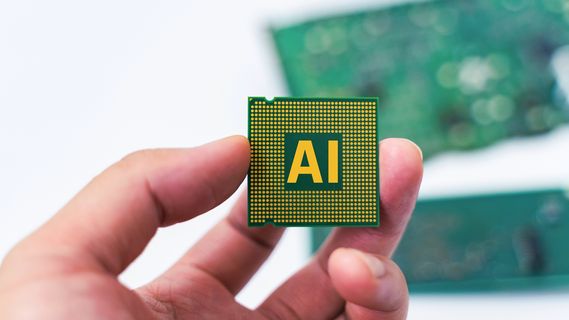
The renewed debate could introduce an additional source of uncertainty for AI-related valuations. If the development of advanced AI models were to slow materially, either voluntarily or because of future regulation, demand for AI infrastructure hardware could weaken in the near term. On the other hand, companies focused on software and governance could benefit from a more structured, compliance-driven environment. While the policy outlook remains highly uncertain, markets may increasingly differentiate between these AI-related exposures.
This week, cybersecurity companies such as CrowdStrike, Palo Alto Networks and Fortinet were among the strongest performers in the US. In contrast, companies benefiting from AI-related capital spending, including Applied Materials, Lam Research and Teradyne, underperformed. In Europe, software company SAP and defence contractor Thales stood out positively, while semiconductor companies including STMicroelectronics, ASM International and Infineon lagged.